Loading page content
Focus area 1 of 6
Improving healthcare access and outcomes for women, children, and vulnerable populations in underserved and conflict-affected communities.
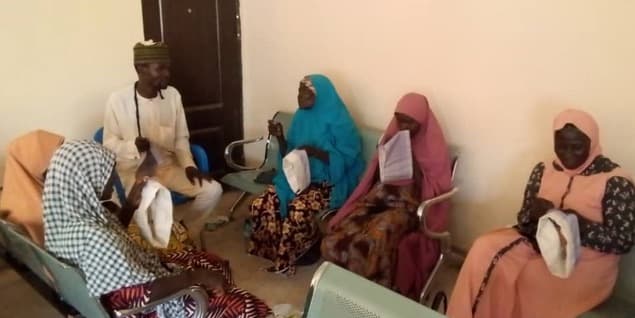
WeCare For You International Organization is committed to improving healthcare access and outcomes, particularly for women, children, and vulnerable populations. Our health work runs from community-level malnutrition screening and therapeutic feeding through to reproductive health education and immunization support, delivered in partnership with state ministries of health and United Nations agencies.
These are aims rather than results. The results this area has actually produced sit with the projects further down the page, each with the figures the organizational profile reports.
Reduce acute malnutrition among children under five and pregnant and lactating women.
Increase uptake of immunization and preventive health services in hard-to-reach communities.
Improve knowledge of breast cancer, cervical cancer, and infectious disease prevention among women.
Expand access to reproductive health information, family planning, and menstrual hygiene support.
Strengthen the capacity of primary health care workers through structured training.
The 5 intervention types recorded for this area in the 2025 organizational profile.
Each programme is transcribed from the organizational profile, with the page it appears on printed alongside it.
Identifying and treating malnourished children through community-driven interventions, including therapeutic feeding and nutritional support.
Organizational profile, page 6.
Promoting optimal breastfeeding and complementary feeding practices to improve child nutrition and reduce malnutrition-related health risks.
Organizational profile, page 6.
Conducting awareness campaigns on malaria, HIV/AIDS, hepatitis, and other preventable diseases.
Organizational profile, page 6.
Supporting vaccination drives to protect children and communities from preventable diseases.
Organizational profile, page 6.
Providing family planning education, menstrual hygiene support, and sexual health awareness.
Organizational profile, page 6.
Each goal is marked with whether our contribution is evidenced by delivered projects or stated as a priority. The distinction is the goal register's own, not ours.
Direct cash grants reached 1,320 women in 2021 under a UNDP award, and our market assessment work grounds livelihood programming in what the local economy can actually absorb.
Our CMAM and IYCF programme in Damboa and Geidam reached 500 pregnant and lactating women and 1,000 children under two with screening, therapeutic feeding, and feeding-practice counselling, funded by the World Food Programme.
Health outreach in Koma reached 500 women and children with cancer and infectious disease sensitization plus drugs and hygiene supplies. Our nutrition, immunization, and reproductive health programming extends this across the North East.
Women and girls are the primary constituency across our portfolio: 1,320 women received cash grants, 500 pregnant and lactating women received nutrition support, 26 women were trained as trainers, and women held 15 of 32 seats on the community management committees we trained.
We drilled a community borehole at Tasha Sani in Yola South and distribute WASH and hygiene kits alongside health outreach, working with RUWASA on rural water and sanitation.
We work where services do not reach — conflict-affected communities, displaced populations, and the Koma hills — and target the groups systematically excluded from them: women, girls, and internally displaced households.
The goal register connects this goal to Health even though the focus area does not list it itself. Both mappings are shown rather than reconciled.
The six areas overlap by design — several projects are delivered under two of them at once.
This area has a delivery record you can inspect project by project. If it fits your mandate, we would rather show you the detail than pitch you a summary.