Loading page content
Focus area 4 of 6
Water, sanitation, livelihoods, agriculture, and infrastructure that move communities from relief towards self-sufficiency.
Sustainable community development is a core focus, with initiatives aimed at improving living conditions and economic opportunities. We drill boreholes and build sanitation facilities, provide women and youth with microfinance and enterprise training, promote climate-appropriate farming practices, and support the construction of schools, health centres, and community resource hubs.
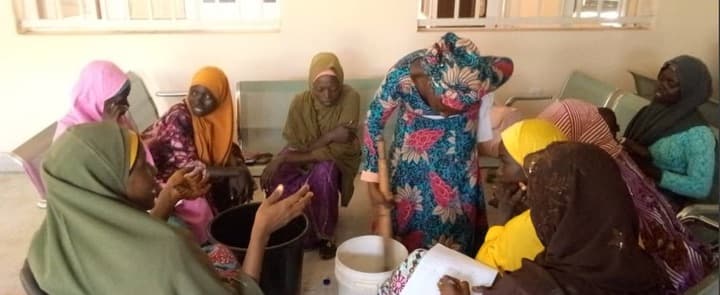
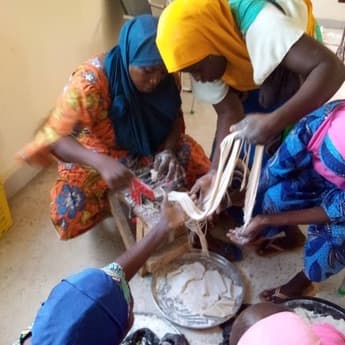
These are aims rather than results. The results this area has actually produced sit with the projects further down the page, each with the figures the organizational profile reports.
Increase the proportion of served communities with a safe, year-round water source.
Raise and stabilise household income for women and youth through grants and enterprise training.
Improve food security through sustainable farming practice adoption.
Deliver community infrastructure that remains functional after project close-out.
The 5 intervention types recorded for this area in the 2025 organizational profile.
Each programme is transcribed from the organizational profile, with the page it appears on printed alongside it.
Providing clean water sources, building sanitation facilities, and promoting hygiene education.
Organizational profile, page 7.
Assisting women and youth with microfinance opportunities and entrepreneurship training.
Organizational profile, page 7.
Promoting sustainable farming practices to enhance food security and economic stability.
Organizational profile, page 7.
Supporting the construction of schools, healthcare centers, and community resource hubs.
Organizational profile, page 7.
Each goal is marked with whether our contribution is evidenced by delivered projects or stated as a priority. The distinction is the goal register's own, not ours.
Direct cash grants reached 1,320 women in 2021 under a UNDP award, and our market assessment work grounds livelihood programming in what the local economy can actually absorb.
Our CMAM and IYCF programme in Damboa and Geidam reached 500 pregnant and lactating women and 1,000 children under two with screening, therapeutic feeding, and feeding-practice counselling, funded by the World Food Programme.
We drilled a community borehole at Tasha Sani in Yola South and distribute WASH and hygiene kits alongside health outreach, working with RUWASA on rural water and sanitation.
Vocational and technical skills training, cash grants for enterprise, and market assessment work that matches training to real local demand rather than to assumption.
Community infrastructure delivered to date includes a borehole at Tasha Sani and a learning centre at Dougire, with schools, health centres, and community resource hubs in our stated infrastructure programme.
Our UNDP Early Recovery and Resilience work in Daware and Malkohi builds community resilience in conflict-affected settlements and trains the management committees that sustain it after handover.
The goal register connects these goals to Livelihoods even though the focus area does not list them itself. Both mappings are shown rather than reconciled.
The six areas overlap by design — several projects are delivered under two of them at once.
This area has a delivery record you can inspect project by project. If it fits your mandate, we would rather show you the detail than pitch you a summary.