Early recovery in Daware and Malkohi: building the committee that carries the work
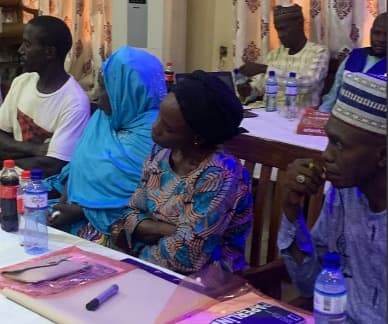
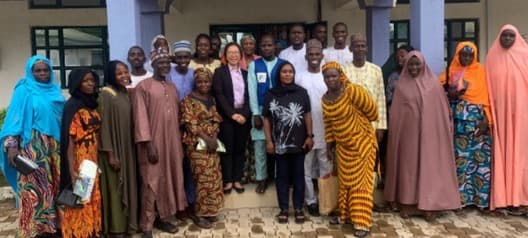
Thirty-two community management committee members — 15 women and 17 men — were trained under a UNDP early recovery project supported by the Government of Japan.
The organization's 2024 work in Daware did not begin in Daware. It began with a question about it. Between January and April of that year, the organization carried out a market assessment in Daware, Fufore Local Government Area, commissioned by the United Nations Development Programme: four months of fieldwork identifying the economic opportunities actually available to the community and the needs still unmet.
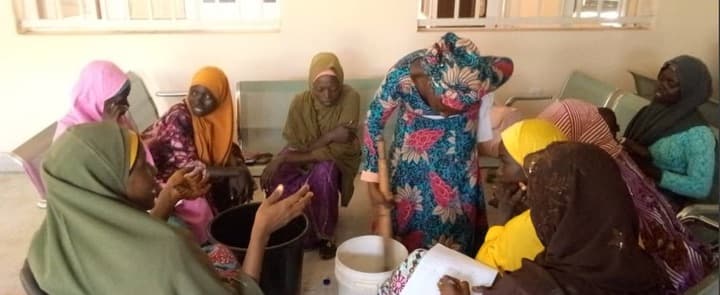
In August, the organization returned to Daware — and to Malkohi — for the Early Recovery and Resilience Project, funded by UNDP with the support of the Government of Japan. Both are conflict-affected communities. The project combined community resilience-building activities with the training of the community management committee.
Thirty-two committee members were trained: 15 women and 17 men.
The gender split is worth stating plainly rather than presenting as a natural outcome. Near-parity on a committee of this type does not happen by default in this context; reaching 47 per cent female membership required deliberate targeting in how members were identified and invited. Stating that is more useful to anyone attempting the same thing than reporting the percentage alone.
The reason the committee is the unit of intervention is that early recovery funding ends. Resilience-building activities delivered directly to a community produce a result that lasts as long as the activities do. A trained management committee is the mechanism by which the work outlasts the funding period — after the project closes, it is the committee, not the organization, that carries it forward. That is the design intent, and it is the standard the work should be judged against.
Grounding the August project in the market assessment completed four months earlier followed the same logic in reverse. Livelihood programming built on an assessment of the local market avoids training people for trades the market cannot absorb.
The project is recorded against Sustainable Development Goals 5, 11, 16 and 17 — gender equality, sustainable cities and communities, strong institutions, and partnerships for the goals.